




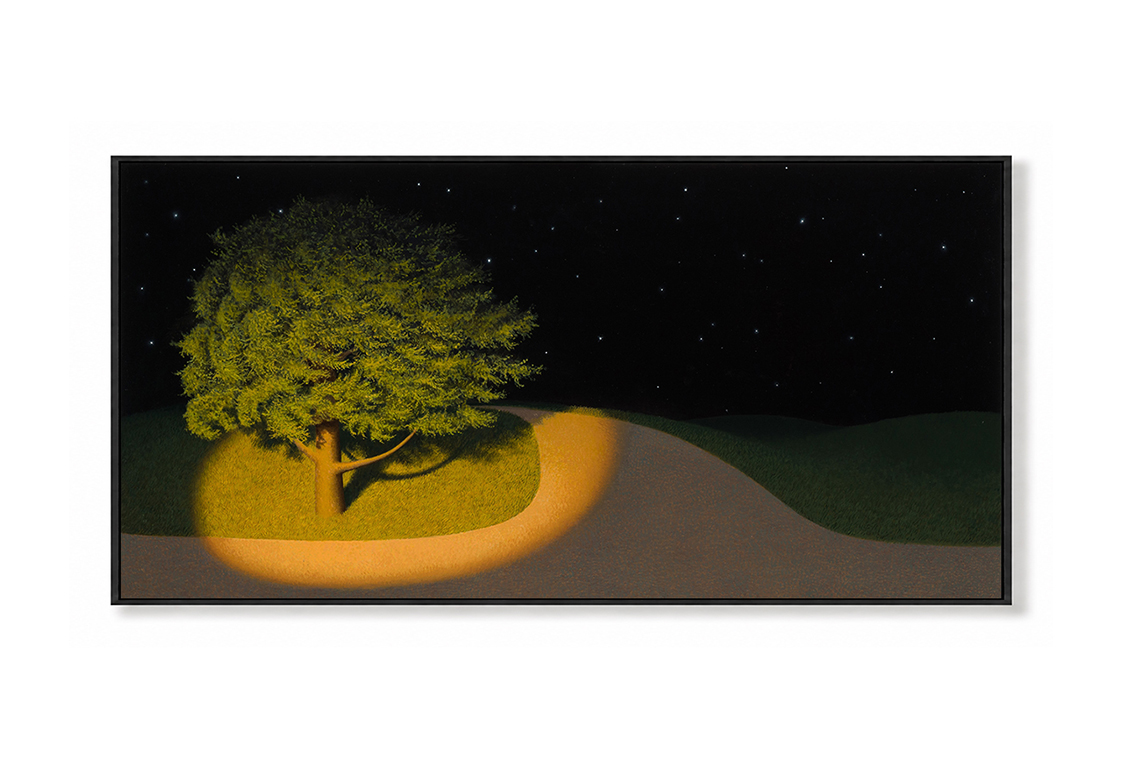

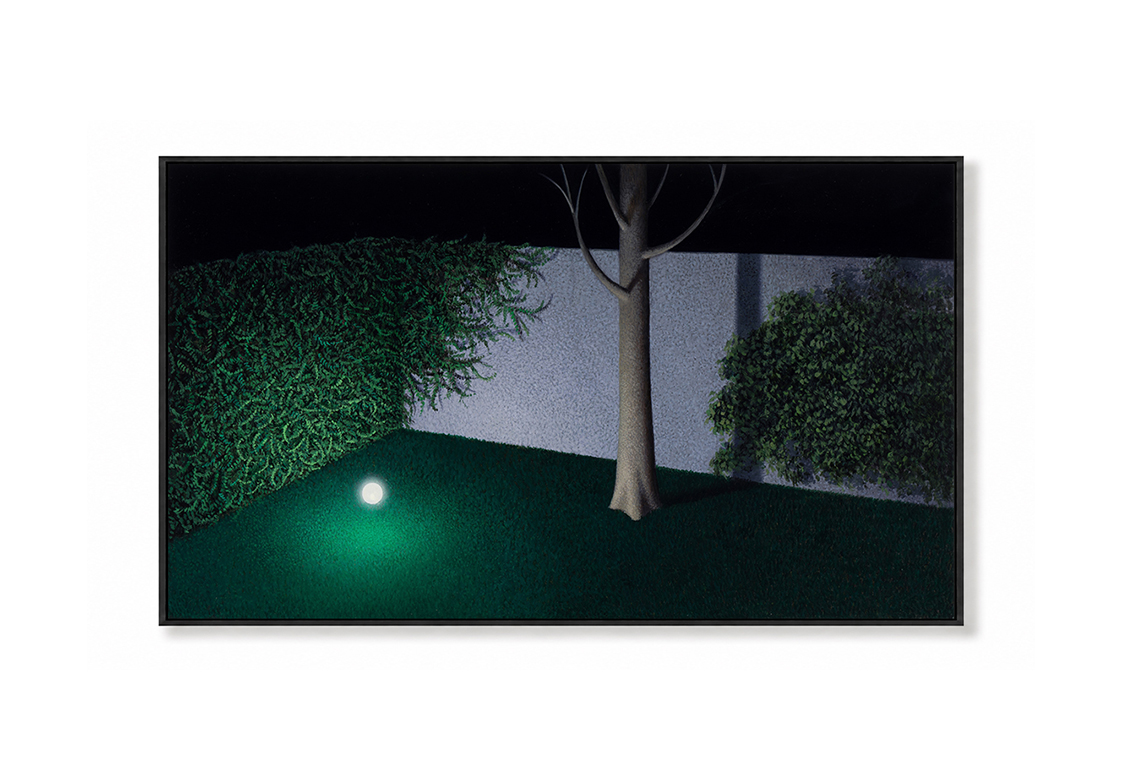

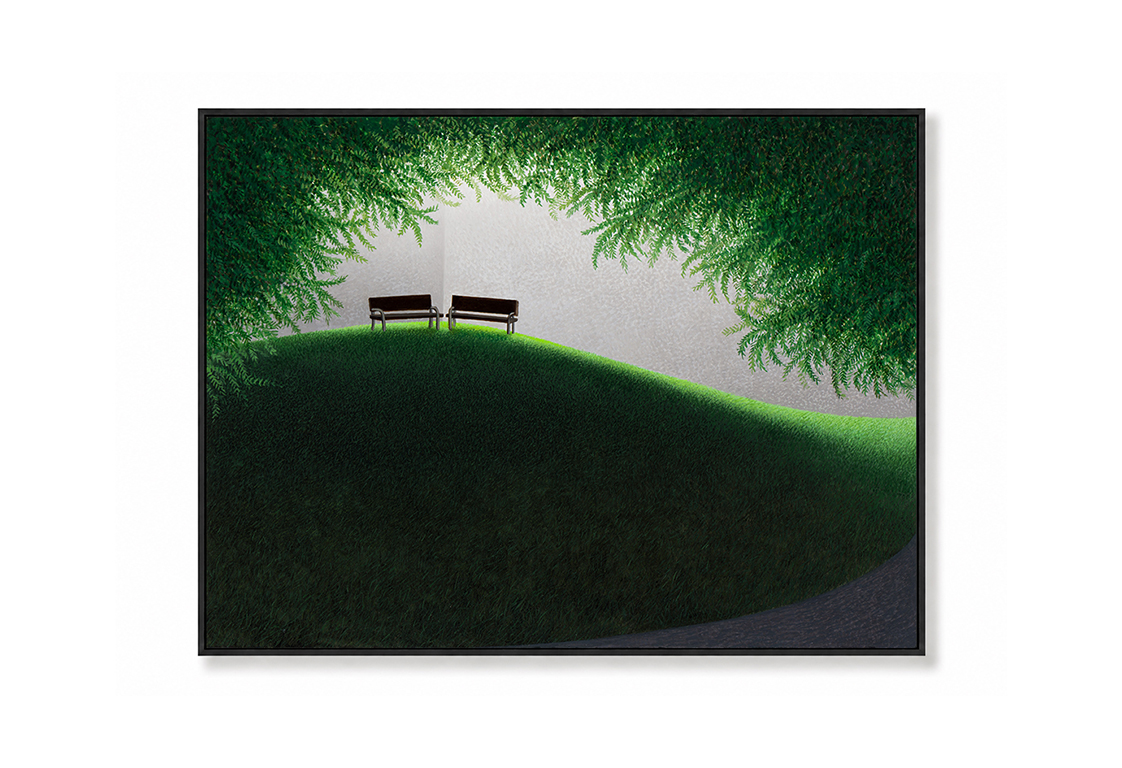


Luce Gallery è lieta di presentare Basta Giocare, la seconda mostra personale di Francesco Pirazzi con la Galleria.
All’adulto, e ai popoli molto colti, tutto il mondo è il mondo dell’ovvio, del luogo comune. […] Ma per il fanciullo, e l’adolescente, e anche per un certo tipo di artista […] non è così! […] Egli capisce ciò che l’adulto non capisce più: che il mondo è un corpo celeste, e tutte le cose, e la loro natura, e il loro senso — tranne una folgorante dolcezza — sono insondabili.
Anna Maria Ortese, Dove il tempo è un altro, 1990
Interno.
Due persone. Una cammina lentamente con un foglio in mano, leggendo a bassa voce mentre prende degli appunti. L’altra, ferma, guarda la platea vuota. Sul graticcio di metallo appena sopra il palcoscenico, un tecnico delle luci sistema l’angolazione dei fari, seguendo le indicazioni della regia. A terra, appoggiate ai muri delle quinte, ci sono nove tele girate, di diverse dimensioni.
«Così assurda la semplicità!»
«È l’inizio del copione?»
«Si, il titolo è “Basta giocare”. Sto preparando questo monologo da un po’ di tempo. Rileggo, correggo, ritorno, aggiungo. Giro ancora intorno a questo incipit, cercando di trovare l’intonazione giusta. “Così assurda la semplicità” …Vorrei che per il pubblico rimanesse il centro, la chiave dello spettacolo. Per il resto, ho pronta la conclusione, e nel mezzo qualche appunto, utile per tentare di esprimere questo mistero»
«Che cosa intendi?»
«È come quando ripeti una stessa parola per tante volte di fila. Ci hai mai provato durante l’infanzia? È un gioco strano, divertente, a volte insidioso, e lo stesso vale per le cose che ci circondano, che più ci inciampi con lo sguardo e più lo scenario cambia, il tempo rallenta, l’occhio si concentra, la mente divaga, ricorda e immagina. Non che si aggiunga nulla, è già tutto lì davanti — le panchine, l’albero, il giardino, il muro di casa, la finestra — ma è come se queste presenze ordinarie, guardate per un tempo prolungato, iniziassero a svelare il loro enigma.
«O forse la loro indifferenza, il fatto che rimangano ferme, sospese nelle loro apparenze, Loro continuano in un altro tempo, anche quando noi non le guardiamo. Non hai pensato a questo mentre ritornavi al tuo incipit?»
«Può darsi, ma non pensi che i due termini coincidano?
“L’enigma di una cosa vicina”, potrei continuare così e lasciare che il pubblico, una volta uscito, si lasci interrogare dal sottofondo nascosto nelle cose familiari, illuminate da una luce sempre diversa, precisa, proveniente da una sorgente sconosciuta. Una volta ho visto una stella in giardino, e poi…»
Mostra il foglio all’altra persona, che continua a guardare la platea vuota.
«…vedi, qui ho scritto a matita di un certo “vuoto produttivo, fatto di silenzio e attesa”»
«A proposito, qui non si è seduto ancora nessuno. Non pensi sia ironico che quando il pubblico arriverà noi non saremo più qui, e il palcoscenico sarà vuoto?»
«È il mio appunto. Noi siamo prima della messa in scena, la stiamo costruendo per chi non ci vedrà. Una volta iniziata saremo fuori da questo teatro, appena fuori dalla cornice, ma tutto sarà costruito a dovere. Lo vedi il tecnico? Sta sistemando i fari per la mostra, perché la luce qui è fondamentale. Aurorale, crepuscolare, per traghettare le visioni in uno stato mediano e indefinito; netta e disciplinata, che come un lampo rivela l’apparenza perturbante degli oggetti; notturna, perché nel buio si può continuare a giocare, come dei bambini, a rendere strane le apparenze della realtà, mantenendo una distanza di sicurezza»
«Dovresti dire tutto questo sottovoce, al momento giusto»
«È già tutto in quelle tele, custodito nel loro silenzio. Lì tutti devono ancora arrivare, o sono appena andati via,
come noi»
«Mi viene voglia di sbirciare»
«Vai. Sono sicuro che lentamente ti accorgerai di una solitudine calma, stranamente familiare, plausibile. Alla fine le panchine, gli alberi, i giardini, i muri delle case, le finestre, hanno sempre dei segreti che giocano con noi e che solo noi possiamo sapere, rispondendo sottovoce con i nostri ricordi, le nostre anomalie, gli enigmi ch muovono il nostro sentire. Anche queste immagini sono dei palcoscenici vuoti, che aspettano, appena prima o appena dopo il copione della vita di tutti i giorni»
«Adesso vado. Qual era poi la conclusione del tuo monologo?»
«Esattamente questa qui: proteggi l’enigma delle cose vicine»
Biografia
Francesco Pirazzi (n. 1994, Veroli, IT) vive e lavora a Torino, IT.
Francesco Pirazzi si è diplomato nel 2018 presso l’Accademia di Belle Arti di Firenze, dove ha studiato pittura con Adriano Bimbi.
Tra le sue mostre personali più recenti si segnalano Coro a Bocca Chiusa, Luce Gallery (Torino, Italia), Somewhere Else e Nobody’s Dream, entrambe presso Augustenborg Project (Augustenborg, Danimarca).
Ha partecipato inoltre a mostre collettive presso gallerie internazionali, tra cui Luce Gallery (Torino, Italia), Cob Gallery e The Artist Room Gallery (Londra, Regno Unito), e The Hole Gallery (New York, Stati Uniti).
Luce Gallery is pleased to present Basta Giocare, Francesco Pirazzi's second Solo Exhibition with the Gallery.
To the adult, and to highly cultured peoples, the whole world is the world of the obvious, of commonplaces. […] But for the child, and the adolescent, and also for a certain kind of artist […] it is not so! […] He understands what the adult no longer understands: that the world is a celestial body, and all things, and their nature, and their meaning — except for a dazzling sweetness — are unfathomable.
Anna Maria Ortese, Dove il tempo è un altro, 1990
Interior.
Two people. One walks slowly with a sheet of paper in hand, reading aloud in a low voice while taking notes. The other, standing still, looks at the empty auditorium. On the metal grid just above the stage, a lighting technician adjusts the angle of the spotlights, following the director’s instructions. On the floor, leaning against the walls of the wings, are nine canvases turned around, of different sizes.
“So absurd, simplicity!”
“Is that the beginning of the script?”
“Yes, the title is Enough Playing. I’ve been working on this monologue for some time. I reread it, correct it, go back to it, add things. I’m still circling around this opening, trying to find the right intonation. ‘So absurd, simplicity’ … I’d like this to remain the centre, the key to the performance for the audience. As for the rest, I have the ending ready, and a few notes in between, useful for trying to express this mystery."
“What do you mean?”
“It’s like when you repeat the same word many times in a row. Have you ever tried it during childhood? It’s a strange, amusing game, sometimes treacherous, and the same is true of the things around us, the more your gaze stumbles upon them, the more the scene changes, time slows down, the eye focuses, the mind wanders, remembers and imagines. It’s not that anything is added; it’s all already there before us — the benches, the tree, the garden, the wall of the house, the window — but it is as if these ordinary presences, when looked at for a prolonged time, begin to reveal their enigma.”
“Or perhaps their indifference, the fact that they remain still, suspended in their appearances. They continue in another time, even when we are not looking at them. Haven’t you thought about this while returning to your opening?”
“Perhaps, but don’t you think the two terms coincide?
‘The enigma of a nearby thing’— I could continue like this and let the audience, once they have left, be questioned by the hidden undertone in familiar things, illuminated by an ever-different, precise light, coming from an unknown source. Once, I saw a star in the garden, and then…”
He shows the sheet of paper to the other person, who continues to look at the empty auditorium.
“…you see, here I’ve written in pencil about a certain ‘productive emptiness, made of silence and waiting’.”
“Speaking of which, no one has sat down here yet. Don’t you think it’s ironic that by the time the audience arrives, we will no longer be here, and the stage will be empty?”
“That’s my note. We are here before the performance, building it for those who will not see us. Once it begins, we will be outside this theatre, just beyond the frame, but everything will have been properly arranged. Do you see the technician? They are adjusting the spotlights for the exhibition, because light is essential here. “Dawn-like, twilight-like, to carry visions into an intermediate and indefinite state; sharp and disciplined, like a flash that reveals the unsettling appearance of objects; nocturnal, because in the dark we can keep playing, like children, at making the appearances of reality strange, while maintaining a safe distance.
“You should say all this in a whisper, at the right moment.”
“It’s all already there in those canvases, preserved in their silence. Everyone there has yet to arrive, or has just left, like us.”
“I feel like taking a peek.”
“Go ahead. I’m sure that, slowly, you’ll become aware of a calm, strangely familiar, plausible solitude. After all, benches, trees, gardens, house walls and windows always have secrets that play with us, and that only we can know, answering in a whisper with our memories, our anomalies, the enigmas that move our feelings. These images, too, are empty stages, waiting just before or just after the script of everyday life.”
“I’m leaving now. What was the ending of your monologue again?”
“Exactly this: protect the enigma of nearby things.”
Biography
Francesco Pirazzi (b. 1994, Veroli, IT) lives and works in Turin, IT.
Francesco Pirazzi graduated in 2018 from the Academy of Fine Arts in Florence, where he studied painting with Adriano Bimbi.
His most recent solo exhibitions include Coro a Bocca Chiusa, Luce Gallery (Turin, Italy), Somewhere Else and Nobody's Dream, both at Augustenborg Project (Augustenborg, Denmark).
He has also participated in group exhibitions at international galleries, including Luce Gallery (Turin, Italy), Cob Gallery and The Artist Room Gallery (London, United Kingdom), and The Hole Gallery (New York, United States).


